
Series 2: From Secession to Pea Ridge (1860–1862) — Article 6
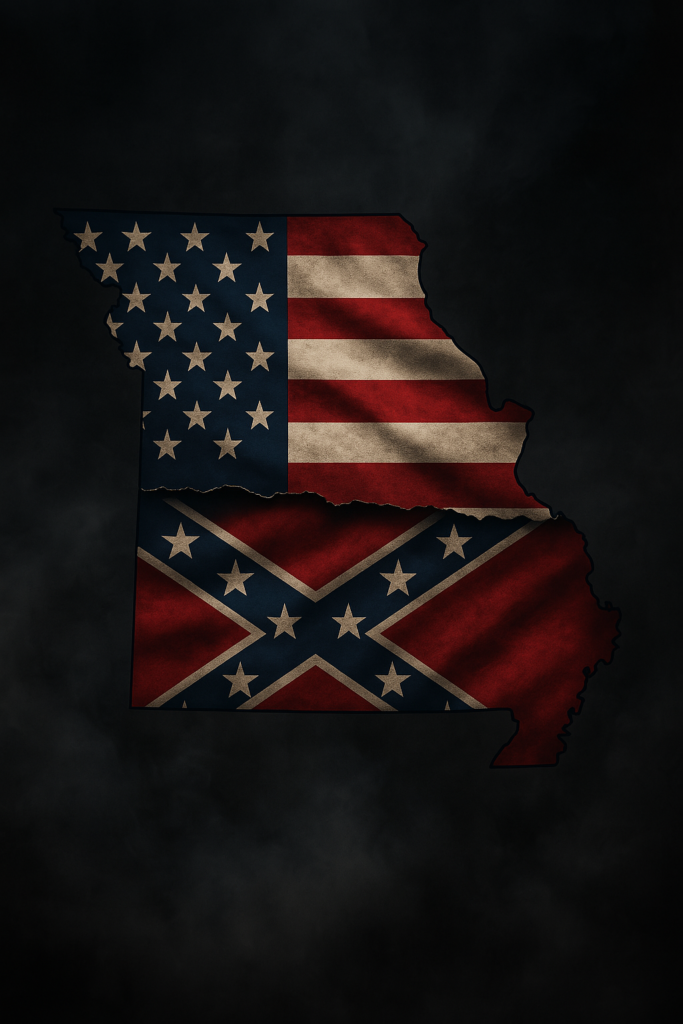
Union control in Missouri tightens after Lexington, as winter campaigns lead to Pea Ridge—the battle that effectively secured the state for the Union.
Table of Contents
Union Control in Missouri and the Road to Pea Ridge
Lexington didn’t end Missouri’s Civil War.
It clarified it.
By late 1861, Missouri was no longer just politically fractured—it was strategically contested. Armies moved. Supply lines mattered. Towns changed hands. And civilian life stayed trapped between competing forces that could appear overnight.
This is where union control in Missouri became the central question.
Not in speeches.
Not in proclamations.
In who could hold ground.
And by the time the fighting reached Pea Ridge, the struggle was no longer only about Missouri.
It was about whether the Confederacy could ever realistically bring Missouri into its orbit.
After Lexington: Union Control in Missouri Was Not Automatic
By the time the war pushed toward Pea Ridge, the state’s fracture was already established—and so was the reality that control would be contested in waves.
Lexington proved that Confederate-aligned forces could still strike hard and make a serious northern push. It showed that Missouri’s conflict was not confined to one region or one corridor.
But Lexington did not reverse the larger pressure building across the state.
Union control in Missouri depended on more than winning a single fight. It depended on:
- holding key routes and river lines
- keeping major population centers secure
- sustaining supply and recruitment
- preventing large Confederate movements from building momentum
Even when Confederate forces won ground, they still faced a hard problem: holding it against a system that could reinforce, resupply, and return.
That grind—pressure, retreat, return—is the story that leads into 1862.
Winter Campaign Pressure: The Union Tightens Its Grip
The winter after 1861 wasn’t quiet.
It was strategic.
This is the phase where union control in Missouri became less about dramatic battlefield moments and more about the unglamorous reality of war: organization, logistics, and sustained presence.
Control meant:
- garrisons in towns
- patrols on roads
- protection of rail and river movement
- disruption of Confederate recruiting and movement
- keeping a pro-Union government functioning under protection
In other words, Missouri was being secured the way unstable states are always secured: not through one decisive speech, but through repeated enforcement of authority.
And while Missouri remained violent and divided, the direction of control was shifting.
The Confederacy could still raid.
It could still threaten.
But it was struggling to hold a lasting position inside Missouri.
That set the stage for the next major question:
Would Confederate forces be able to regroup and return in strength from the south?
Pea Ridge: Union Control in Missouri Becomes the Outcome
Pea Ridge mattered because it answered that question.
In early March 1862, the conflict culminated in northwest Arkansas at Pea Ridge—centered around the Elkhorn Tavern area—where Union and Confederate forces fought for control of the gateway region tied directly to Missouri’s security.
This battle wasn’t fought inside Missouri.
But it determined Missouri’s future.
A Union victory at Pea Ridge didn’t erase Missouri’s internal war. It didn’t end divided loyalties. It didn’t shut down guerrilla violence.
But it effectively ended the Confederacy’s ability to mount a serious campaign aimed at bringing Missouri under Confederate control.
That is why Pea Ridge belongs at the end of this series.
Because after Pea Ridge, union control in Missouri was no longer just a goal.
It was the strategic reality.
What Union Control in Missouri Actually Meant
It’s important to be precise here.
Union control in Missouri did not mean peace.
It did not mean unity.
And it did not mean Missouri stopped fighting itself.
It meant something narrower—and more powerful:
- the Union could hold the state’s strategic centers and routes
- Confederate forces could no longer reasonably expect to seize and keep Missouri
- large-scale Confederate campaigning aimed at Missouri became far less viable
Missouri could still burn from within.
But the broader war for the state’s strategic alignment had tilted decisively.
This is why Missouri’s story after Pea Ridge shifts in tone. The war doesn’t disappear—it changes shape.
Missouri After Pea Ridge: Control Secured, Chaos Unleashed
After Pea Ridge, Missouri was not “saved.”
It was secured—then destabilized in a different way.
With union control in Missouri effectively established at the strategic level, the conflict increasingly spilled into the spaces conventional armies struggled to govern:
- countryside
- border counties
- divided towns
- family networks
- local vendettas disguised as politics
In other words, the war didn’t end.
It narrowed inward.
And that narrowing is exactly what comes next.
Looking Ahead
Next Thursday (January 29, 2026), we leave the era of early campaigns and conventional battles and step into the phase Missouri is most infamous for—the conflict without clear front lines.
Series 3: The Guerrilla Years (1862–1864) begins where “control” fails to bring peace—when divided communities, retaliation, and irregular warfare turn Missouri into a different kind of battlefield.
New articles every Thursday as we dive deeper into the chaos of Missouri’s Civil War and its lasting divisions.
Plan Your Next Missouri Civil War Adventure!
Ready to hit the road?
Plan your Missouri Civil War adventure with trusted travel tips, tools, and resources. Visit our Resource Page (Missouri Civil War Resources) to find everything you need for hotels, flights, car rentals, gear, and more.
Check Out These Missouri Civil War (Overview) Articles
Missouri Civil War: Why This Forgotten Story Matters
Civil War In Missouri: 6 Questions You Should Ask
Bleeding Kansas: Missouri’s Volatile Border War (1854–61)
General Lyon Takes Missouri: 1861’s Breaking Point
Guerrilla Warfare in Missouri: Chaos Explodes (1861–65)
The Cloak and Dagger Side of Missouri’s Civil War
Missouri Women at War: Discover The Unsung Heroes
General Order No. 11 – Missouri’s Burnt District
Price’s Raid (1864): Missouri’s Last Daring Gamble
Check Out These In Depth Articles About The Five Phases Of The Civil War In Missouri
Missouri’s Civil War (1854–1900): Explore The Complete Guide
Series 1: The Fires Before The War – Bleeding Kansas (1854 – 1860)
Bleeding Kansas: The Missouri and Kansas Border Ignites
The Kansas-Nebraska Act – Unleashing Pandora’s Box
Border Ruffians & Free-Staters — The Border Turns Hostile
Bleeding Kansas Massacres — Fire and Vengeance on the Border
Missouri State Militias – How They Rose From Border Chaos
Propaganda — How Words Fueled Missouri’s Civil War
Election of 1860 — Missouri at the Breaking Point
Series 2: From Secession to Pea Ridge (1860 – 1862)
Missouri Civil War Ignites – Secession Tears the State Apart
Missouri Civil War Erupts – The Road to War (1860–1861)
Camp Jackson Affair: The Spark That Ignited Missouri
Battle of Boonville – Jefferson City Falls & Missouri Breaks
Missouri Early Battles: The Clash Before Wilson’s Creek
Missouri’s Split Government – A State Torn in Two
Check Out These Books Published By The Sojourner’s Compass
“Missouri in the Crossfire – The Civil War’s Forgotten Frontier” Series
From the streets of St. Louis to the prairies of southwest Missouri, this compelling short-read series uncovers the untold stories of a divided state at war. Each volume explores a new side of Missouri’s Civil War—its campaigns, commanders, civilians, and the conflicts that shaped its destiny.
Written for both history enthusiasts and casual readers, Missouri in the Crossfire brings the human side of the war to life through vivid storytelling, balanced perspectives, and accessible scholarship—all drawn from Missouri’s own battle-scarred ground.
Available on Amazon & Kindle Unlimited
“Battles & Beyond” – Companion Book Series
From river crossings to ridge fights, Missouri’s Civil War story was one of chaos, courage, and contested loyalties. This travel-ready series delivers concise battlefield guides packed with historical context, walking tips, firsthand quotes, and itinerary tie-ins—perfect for travelers, educators, and armchair historians alike.
Led by Jonathon Midgley, author of The Last Hand series, each volume brings forgotten fights into clear focus—making it easy to explore the war’s impact, one battlefield at a time.
Available On Amazon & Kindle Unlimited
Stay Connected
Follow us for travel inspiration, new articles, and short-form video features:
The Sojourner’s Compass TikTok
The Sojourner’s Compass YouTube
The Sojourner’s Compass Facebook
The Sojourner’s Compass Main Website
Leave a Reply