
Series 2: From Secession to Pea Ridge (1860–1862) — Article 2
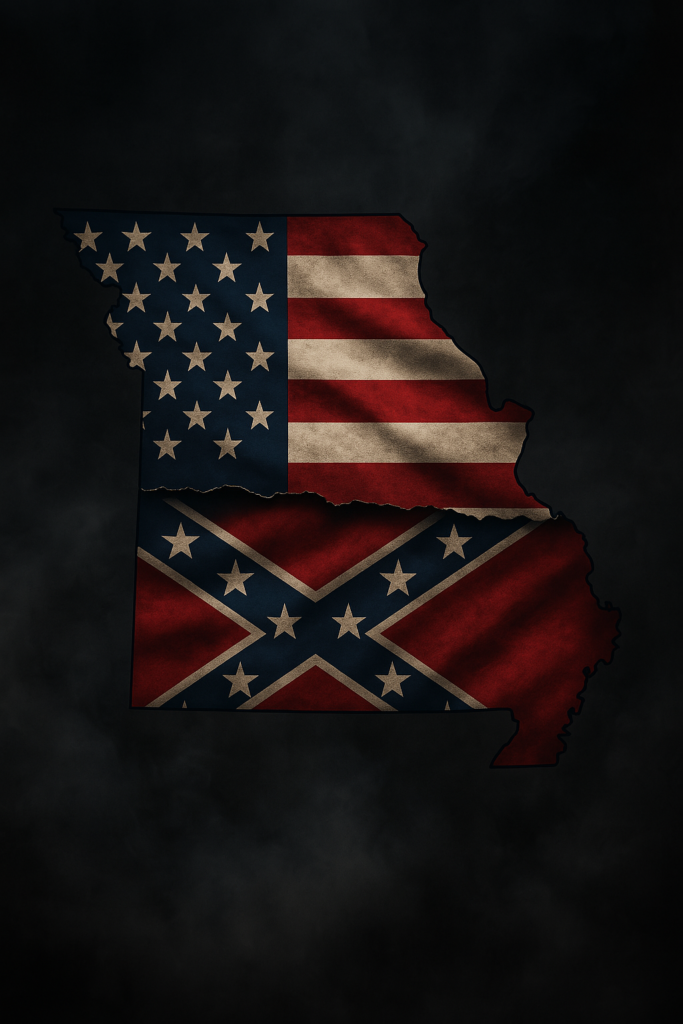
Camp Jackson shattered Missouri’s fragile peace in May 1861, turning political crisis into open violence and pushing the state toward civil war.
Table of Contents
Camp Jackson Affair: The Spark in St. Louis
Missouri’s Civil War did not begin on a battlefield.
It began in a city street, surrounded by civilians, armed soldiers, and a state still pretending it could remain neutral.
The Camp Jackson Affair was the moment Missouri crossed a line it could not step back from. What had been political tension, militia posturing, and uneasy compromise erupted into bloodshed in St. Louis—transforming fear into violence and ending any illusion that Missouri could avoid war.
A City Under Pressure
By the spring of 1861, St. Louis was one of the most strategically important cities in the United States.
It sat on the Mississippi River.
It controlled transportation, industry, and supply routes.
And most importantly, it housed the St. Louis Arsenal, one of the largest federal stockpiles of weapons west of the Appalachians.
Control of St. Louis meant control of Missouri.
Missouri’s governor, Claiborne Fox Jackson, publicly supported neutrality. Privately, he worked to align the state with the Confederacy. His strategy depended on seizing the arsenal before federal forces could react.
Unionists understood the danger.
So did Washington.
The Camp Jackson Affair was already forming before a single shot was fired.
Militias, Loyalties, and the Arsenal
St. Louis was deeply divided—but not evenly.
A large population of German immigrants strongly supported the Union. Many had fled political repression in Europe and viewed secession as a betrayal of republican government. These men formed the backbone of St. Louis’s Unionist Home Guard units.
On the other side stood pro-Southern state militia forces loyal to Governor Jackson.
In early May 1861, Jackson ordered militia units to assemble just outside the city at Camp Jackson, officially for training. Unofficially, Union leaders believed the camp was preparing to seize the arsenal.
Their suspicions were not unfounded.
Weapons sent from the Confederacy—reportedly disguised as “marble”—were discovered at the camp. To Unionists, this confirmed that Missouri’s neutrality was already a lie.
The Camp Jackson Affair was about to explode.
Nathaniel Lyon Acts
Captain Nathaniel Lyon, commander of the St. Louis Arsenal, was not a patient man.
Lyon believed delay meant disaster. If the arsenal fell, Missouri would follow. With Washington’s backing and local Unionist support, he decided to act first.
On May 10, 1861, Lyon surrounded Camp Jackson with thousands of Union troops—many of them German immigrants—cutting off escape.
The militia inside the camp was outnumbered and unprepared.
They surrendered without a fight.
But the Camp Jackson Affair did not end with surrender.
It was just beginning.
Violence in the Streets
As Union troops marched the captured militia through St. Louis, crowds gathered.
The city erupted into chaos.
Angry civilians hurled insults, rocks, and threats. Shouts of “traitor” mixed with curses aimed at Union soldiers. Tensions snapped.
A shot was fired—by whom remains disputed.
Then came gunfire.
Union troops fired into the crowd.
Civilians fell.
Panic spread.
By the end of the day, at least 28 people were dead, most of them civilians.
The Camp Jackson Affair had turned a political crisis into open bloodshed in the streets of Missouri’s largest city.
The End of Neutrality
The consequences were immediate.
Any remaining hope that Missouri could stay neutral vanished with the smoke over St. Louis.
Unionists viewed Lyon as a necessary defender of the Union.
Secessionists viewed him as a tyrant who had used force against Missourians.
Moderates were forced to choose sides.
The Camp Jackson Affair radicalized the state overnight.
Governor Jackson fled Jefferson City.
The Missouri legislature fractured.
Militias across the state began mobilizing openly.
What had been preparation became war.
Why Camp Jackson Mattered
The Camp Jackson Affair mattered because it removed ambiguity.
It proved that neutrality could not survive armed camps, divided loyalties, and federal arsenals sitting inside a border state.
It ensured that Missouri would not drift into war slowly.
It would be pulled in violently.
The affair also set a pattern that defined Missouri’s Civil War:
• Civilian involvement
• Urban unrest
• Neighbor turning on neighbor
• Violence without clear battle lines
Missouri’s war would not be clean.
It would be personal.
Missouri After Camp Jackson
After the Camp Jackson Affair, events moved rapidly.
Nathaniel Lyon pushed deeper into the state.
Governor Jackson aligned openly with secessionist forces.
Armed clashes followed at Boonville, Carthage, and Wilson’s Creek.
But none of those battles would have happened the same way without Camp Jackson.
It was the moment Missouri’s crisis became irreversible.
Why the Spark Still Matters
Understanding the Camp Jackson Affair explains why Missouri’s Civil War unfolded differently than anywhere else.
The war began not with cannons on a battlefield, but with fear in a city.
It began with civilians caught between armed men.
It began with mistrust, rumors, and decisions made under pressure.
By the time Missouri’s armies met in open combat, the state had already been torn apart.
Camp Jackson lit the fuse.
Looking Ahead
Next Thursday (January 1, 2026), we continue Series 2 with:
Governor Jackson and General Price flee Jefferson City, and the rout at Boonville.
We’ll examine how Lyon’s rapid advance forced Missouri’s government into flight—and how the fight for political control turned into a fight for the state itself.
New articles every Thursday as we follow how Missouri became the decisive battleground of the Trans-Mississippi war.
Plan Your Next Missouri Civil War Adventure!
Ready to hit the road?
Plan your Missouri Civil War adventure with trusted travel tips, tools, and resources. Visit our Resource Page (Missouri Civil War Resources) to find everything you need for hotels, flights, car rentals, gear, and more.
Check Out These Missouri Civil War (Overview) Articles
Missouri Civil War: Why This Forgotten Story Matters
Civil War In Missouri: 6 Questions You Should Ask
Bleeding Kansas: Missouri’s Volatile Border War (1854–61)
Missouri – 3 Reasons It Was the Civil War’s Western Key
General Lyon Takes Missouri: 1861’s Breaking Point
Guerrilla Warfare in Missouri: Chaos Explodes (1861–65)
The Cloak and Dagger Side of Missouri’s Civil War
Missouri Women at War: Discover The Unsung Heroes
General Order No. 11 – Missouri’s Burnt District
Price’s Raid (1864): Missouri’s Last Daring Gamble
Check Out These In Depth Articles About The Five Phases Of The Civil War In Missouri
Missouri’s Civil War (1854–1900): Explore The Complete Guide
Series 1: The Fires Before The War – Bleeding Kansas (1854 – 1860)
Bleeding Kansas: The Missouri and Kansas Border Ignites
The Kansas-Nebraska Act – Unleashing Pandora’s Box
Border Ruffians & Free-Staters — The Border Turns Hostile
Bleeding Kansas Massacres — Fire and Vengeance on the Border
Missouri State Militias – How They Rose From Border Chaos
Propaganda — How Words Fueled Missouri’s Civil War
Election of 1860 — Missouri at the Breaking Point
Series 2: From Secession to Pea Ridge (1860 – 1862)
Missouri Civil War Ignites – Secession Tears the State Apart
Missouri Civil War Erupts – The Road to War (1860–1861)
Check Out These Books Published By The Sojourner’s Compass
“Missouri in the Crossfire – The Civil War’s Forgotten Frontier” Series
From the streets of St. Louis to the prairies of southwest Missouri, this compelling short-read series uncovers the untold stories of a divided state at war. Each volume explores a new side of Missouri’s Civil War—its campaigns, commanders, civilians, and the conflicts that shaped its destiny.
Written for both history enthusiasts and casual readers, Missouri in the Crossfire brings the human side of the war to life through vivid storytelling, balanced perspectives, and accessible scholarship—all drawn from Missouri’s own battle-scarred ground.
Available on Amazon & Kindle Unlimited
“Battles & Beyond” – Companion Book Series
From river crossings to ridge fights, Missouri’s Civil War story was one of chaos, courage, and contested loyalties. This travel-ready series delivers concise battlefield guides packed with historical context, walking tips, firsthand quotes, and itinerary tie-ins—perfect for travelers, educators, and armchair historians alike.
Led by Jonathon Midgley, author of The Last Hand series, each volume brings forgotten fights into clear focus—making it easy to explore the war’s impact, one battlefield at a time.
Available On Amazon & Kindle Unlimited
Stay Connected
Follow us for travel inspiration, new articles, and short-form video features:
The Sojourner’s Compass TikTok
The Sojourner’s Compass YouTube
The Sojourner’s Compass Facebook
The Sojourner’s Compass Main Website
Leave a Reply