
Missouri Civil War Battles — Part 1
Camp Jackson Affair — May 10, 1861: Union forces seized a pro-Southern militia camp in St. Louis, sparking riot and bloodshed.
Table of Contents
On May 10, 1861, St. Louis didn’t just witness the Civil War — it felt it. The Camp Jackson Affair was the moment Missouri’s political crisis turned into street-level bloodshed, and it set the tone for how chaotic the war inside this state would become.
Battle Snapshot (fast facts)
- Battle/Event: Camp Jackson Affair
- Date: May 10, 1861
- Location: St. Louis, Missouri (Camp Jackson area; march through the city)
- Type: Incident / armed seizure
- Style of fighting: Conventional military arrest and escort that erupts into a civilian riot (urban violence)
Who Was There
- Union / U.S. side (key leaders):
- Capt. Nathaniel Lyon (U.S. Army)
- Rep. Frank Blair Jr. (political organizer of Unionist forces in St. Louis)
- Missouri state / pro-Southern side (key leaders):
- Governor Claiborne Fox Jackson (pro-secession)
- Brig. Gen. Daniel M. Frost (Missouri Volunteer Militia)
- Notable forces involved:
- U.S. Regulars and Unionist volunteer regiments (including German-American units from St. Louis)
- Missouri Volunteer Militia encamped at Camp Jackson
What Happened (the story)
In early 1861, Missouri was a state trying to stand in two places at once. Officially, the government talked moderation. In reality, both sides were scrambling to control weapons, river cities, and rail hubs before the other could.
St. Louis mattered more than almost anywhere else in the state. It sat on the Mississippi, controlled supply routes, and held the federal arsenal — a prize both camps understood. Unionist leaders in the city feared that pro-secession forces would seize those arms and swing Missouri into the Confederacy by force.
A large state militia camp formed outside St. Louis—Camp Jackson—under General Daniel Frost. Unionists believed the camp was being prepared for action against federal property and had received Confederate-supplied arms that could threaten the St. Louis Arsenal.
On May 10, Captain Nathaniel Lyon moved to end the threat in one decisive blow. Union forces surrounded Camp Jackson and demanded surrender. The militia complied. The seizure itself was quick — a textbook show of force: surround, disarm, and take control before a fight can start.
But what happened next is what made Camp Jackson a turning point.
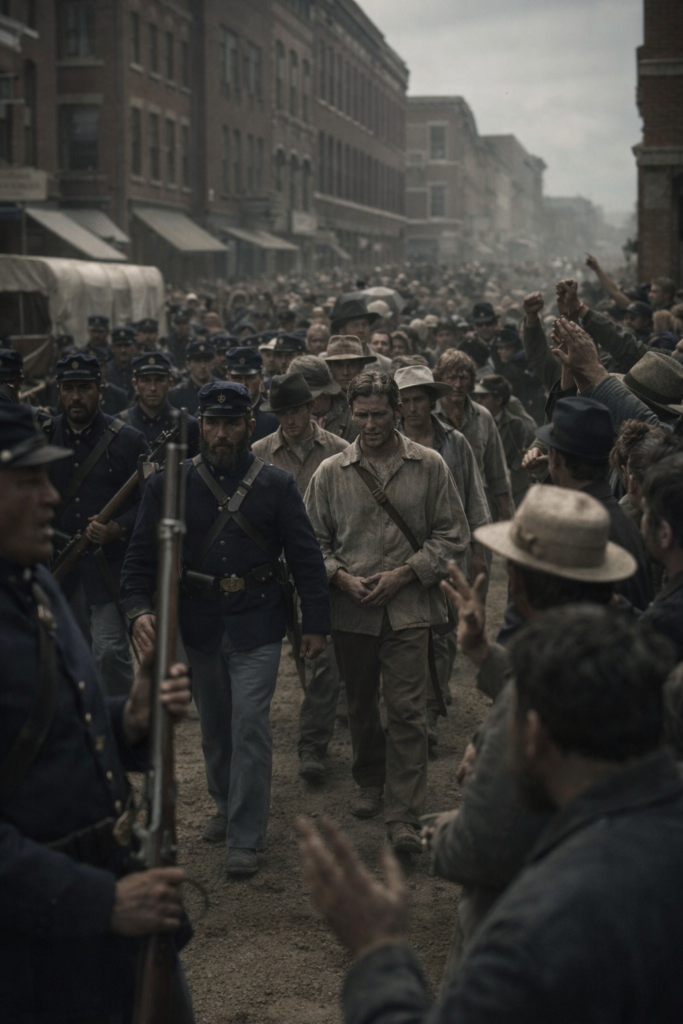
Lyon’s men began marching the captured militiamen back through St. Louis. That public procession — armed soldiers escorting surrendered Missourians — poured gasoline on an already tense city. A crowd gathered. Angry words turned into throwing objects. Threats and taunts escalated on both sides. Then shots rang out.
Within minutes, St. Louis had crossed a line it could never step back from. The confrontation turned into a riot and gunfire. Civilians were hit. Soldiers were hit. People died in the streets — not on a battlefield, but in a city that had become a powder keg.
The immediate result was simple: the militia had been captured and removed as a force in St. Louis. The deeper result was worse: Missouri’s crisis was now soaked in blood, and everyone in the state took note.
Who Won + What That Means
- Result: Union victory (militia captured; Camp Jackson neutralized)
- Type of victory: Tactical and political — but strategically explosive
Tactically, the Union achieved its objective: the pro-secession militia camp was disarmed before it could strike. Politically, Unionists demonstrated they would use force to keep Missouri from slipping away.
But strategically, the violence that followed made compromise harder. It didn’t calm Missouri — it polarized it. For many Missourians, May 10 didn’t look like “order restored.” It looked like occupation, humiliation, and tragedy. That perception mattered, because perception is fuel in a civil war.
Why It Matters
Camp Jackson is one of those events that explains why Missouri’s war didn’t look like Virginia’s war.
This wasn’t two armies meeting in open fields. It was a clash over control — control of weapons, control of a major city, control of public loyalty. It showed that Missouri’s conflict would be fought through arrests, raids, reprisals, divided neighborhoods, and sudden violence as much as through formal battles.
After May 10, momentum built quickly toward open campaigning. The state government moved further toward the pro-Southern side. Union military leadership became more aggressive. And ordinary Missourians realized something terrifying: the war wasn’t “out there” somewhere — it was now right here, and it could erupt on a street corner.
If you want a single moment when Missouri’s Civil War truly “began,” Camp Jackson is one of the best candidates.
Next Up In This Timeline
June 17, 1861 — the First Battle of Boonville, where the fight shifts from city streets to control of the Missouri River.
When you think of Missouri’s Civil War, do you picture big battles — or moments like Camp Jackson where the danger is the city itself?
Plan Your Next Missouri Civil War Adventure!
Ready to hit the road?
Plan your Missouri Civil War adventure with trusted travel tips, tools, and resources. Visit our Resource Page (Missouri Civil War Resources) to find everything you need for hotels, flights, car rentals, gear, and more.
Check Out Our Other Missouri Civil War Articles
Missouri Civil War Overview Articles
The Five Phases of Missouri’s Civil War
Missouri Civil War Battles (In Chronological Order)
New Articles Every Thursday!
Check Out These Books Published By The Sojourner’s Compass
“Missouri in the Crossfire – The Civil War’s Forgotten Frontier” Series
From the streets of St. Louis to the prairies of southwest Missouri, this compelling short-read series uncovers the untold stories of a divided state at war. Each volume explores a new side of Missouri’s Civil War—its campaigns, commanders, civilians, and the conflicts that shaped its destiny.
Written for both history enthusiasts and casual readers, Missouri in the Crossfire brings the human side of the war to life through vivid storytelling, balanced perspectives, and accessible scholarship—all drawn from Missouri’s own battle-scarred ground.
Available on Amazon & Kindle Unlimited
“Battles & Beyond” – Companion Book Series
From river crossings to ridge fights, Missouri’s Civil War story was one of chaos, courage, and contested loyalties. This travel-ready series delivers concise battlefield guides packed with historical context, walking tips, firsthand quotes, and itinerary tie-ins—perfect for travelers, educators, and armchair historians alike.
Led by Jonathon Midgley, author of The Last Hand series, each volume brings forgotten fights into clear focus—making it easy to explore the war’s impact, one battlefield at a time.
Available On Amazon & Kindle Unlimited
Stay Connected
Follow us for travel inspiration, new articles, and short-form video features:
The Sojourner’s Compass TikTok
The Sojourner’s Compass YouTube
The Sojourner’s Compass Facebook
The Sojourner’s Compass Main Website
Leave a Reply