
Missouri Civil War Battles — Part 2
Battle of Boonville — June 17, 1861: Lyon’s Union victory secured the Missouri River and scattered pro-Southern forces.
Table of Contents
If Camp Jackson lit the fuse in St. Louis, Boonville was the first time Missouri’s Civil War sprinted into the open. On June 17, 1861, the fight for the Missouri River corridor began with a fast, messy running battle that shifted control of central Missouri almost overnight.
Battle Snapshot (fast facts)
- Battle: First Battle of Boonville
- Date: June 17, 1861
- Location: Boonville area, along the Missouri River (central Missouri)
- Type: Battle
- Style of fighting: Running/routing fight (rapid engagement → withdrawal → pursuit)
Who Was There
- Union commander:
- Brig. Gen. Nathaniel Lyon
- Missouri State Guard / pro-Southern leaders:
- Gov. Claiborne Fox Jackson (political leader; present/overall state authority)
- Col. John S. Marmaduke (Missouri State Guard field commander at Boonville)
- Maj. Gen. Sterling Price (overall MSG commander, but absent due to illness)
- Notable units involved:
- Union: U.S. Regulars + early-war volunteer infantry with supporting artillery
- Pro-Southern: Missouri State Guard / militia-style forces, hastily organized
What Happened (the story)
In June 1861, Missouri was still deciding what it was. Not in speeches — in roads, river landings, bridges, and courthouse towns. After Camp Jackson, the state’s pro-Southern leadership moved west, trying to build momentum, gather recruits, and keep control of the Missouri River corridor. That corridor mattered because the river wasn’t just water — it was a highway. Whoever held it could move men, supplies, and news faster than the other side could react.
Nathaniel Lyon didn’t plan to give them time.
Lyon pushed up the river with speed and pressure, aiming to break the growing State Guard movement before it turned into something harder to stop. Near Boonville, pro-Southern forces took position to resist him. But this wasn’t a polished army facing a polished army. It was early war Missouri — half-formed units, uneven training, and big stakes packed into a small stretch of ground.
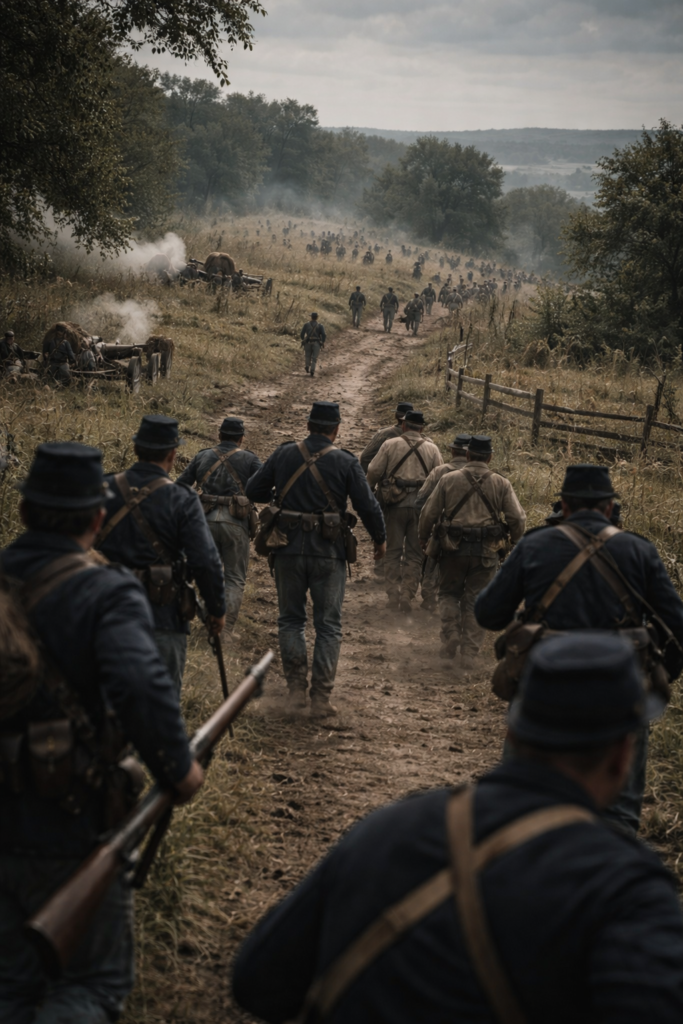
The fight erupted quickly. What makes Boonville stand out isn’t a long, grinding battlefield story — it’s the way it turned into motion. As Union pressure hit, the engagement didn’t settle into a neat line-and-hold. It became a running contest of nerve: firing, falling back, trying to reform, getting pushed again. The battlefield “moved” as one side pressed and the other tried to keep from collapsing.
And then it did collapse.
Under the weight of Lyon’s advance, the pro-Southern defense broke into retreat. The rapid withdrawal became so memorable that the fight earned the nickname “The Boonville Races.” It was a mocking name, but it captured the point: the battle had turned from resistance into flight.
The Union victory wasn’t just about the shots fired — it was about what the retreat meant: control lost, momentum stolen, and recruits watching closely as one side proved it could take and hold ground.
When the smoke cleared, Boonville had delivered a blunt message to the entire state: this war was going to be decided by who could move fast and control corridors — not just who could give speeches.
Who Won + What That Means
- Result: Union victory
- Type of victory: Tactical win with immediate strategic impact
Tactically, Lyon won the fight and pushed the opposing force back. But Boonville mattered because it did something bigger than “win a battle” — it stabilized the Missouri River corridor for the Union at a critical early moment.
That stability shaped everything that followed. It made it harder for the pro-Southern state leadership to operate freely in central Missouri. It disrupted recruitment and organization. And it signaled that federal forces weren’t going to sit in St. Louis and hope Missouri calmed down — they were going to move.
Why It Matters
Boonville is one of those early fights that looks small on paper but casts a long shadow.
- Geography: The Missouri River corridor was a lifeline. Holding it meant faster movement, easier supply, and stronger influence over central Missouri towns.
- Momentum: Early war is about confidence and recruitment. A quick victory convinces fence-sitters that one side is “real” and the other side is scrambling.
- Pattern-setting: Boonville foreshadows Missouri’s style of war — quick clashes, sudden retreats, and constant pressure over roads and crossings rather than one clean front line.
In plain terms: Boonville didn’t end Missouri’s crisis. It just made the next steps inevitable. The struggle for control moved south and west, and Missouri’s war got louder.
Next Up In This Timeline
June 19, 1861 — the Battle of Cole Camp, where the war flips from a running fight into a violent surprise attack that shocks Unionist communities.
When you think about “control,” what matters more in a civil war — the biggest battlefield… or the roads and rivers that let you show up first?
Plan Your Next Missouri Civil War Adventure!
Ready to hit the road?
Plan your Missouri Civil War adventure with trusted travel tips, tools, and resources. Visit our Resource Page (Missouri Civil War Resources) to find everything you need for hotels, flights, car rentals, gear, and more.
Check Out Our Other Missouri Civil War Articles
Missouri Civil War Overview Articles
The Five Phases of Missouri’s Civil War
Missouri Civil War Battles (In Chronological Order)
Camp Jackson Affair — May 10, 1861
Check Out These Books Published By The Sojourner’s Compass
“Missouri in the Crossfire – The Civil War’s Forgotten Frontier” Series
From the streets of St. Louis to the prairies of southwest Missouri, this compelling short-read series uncovers the untold stories of a divided state at war. Each volume explores a new side of Missouri’s Civil War—its campaigns, commanders, civilians, and the conflicts that shaped its destiny.
Written for both history enthusiasts and casual readers, Missouri in the Crossfire brings the human side of the war to life through vivid storytelling, balanced perspectives, and accessible scholarship—all drawn from Missouri’s own battle-scarred ground.
Available on Amazon & Kindle Unlimited
“Battles & Beyond” – Companion Book Series
From river crossings to ridge fights, Missouri’s Civil War story was one of chaos, courage, and contested loyalties. This travel-ready series delivers concise battlefield guides packed with historical context, walking tips, firsthand quotes, and itinerary tie-ins—perfect for travelers, educators, and armchair historians alike.
Led by Jonathon Midgley, author of The Last Hand series, each volume brings forgotten fights into clear focus—making it easy to explore the war’s impact, one battlefield at a time.
Available On Amazon & Kindle Unlimited
Stay Connected
Follow us for travel inspiration, new articles, and short-form video features:
The Sojourner’s Compass TikTok
The Sojourner’s Compass YouTube
The Sojourner’s Compass Facebook
The Sojourner’s Compass Main Website
Leave a Reply