
Missouri Civil War Battles — Part 4
Battle of Carthage — July 5, 1861: A running fight in Jasper County pushed Sigel’s Federals back through Carthage toward Sarcoxie.
Table of Contents
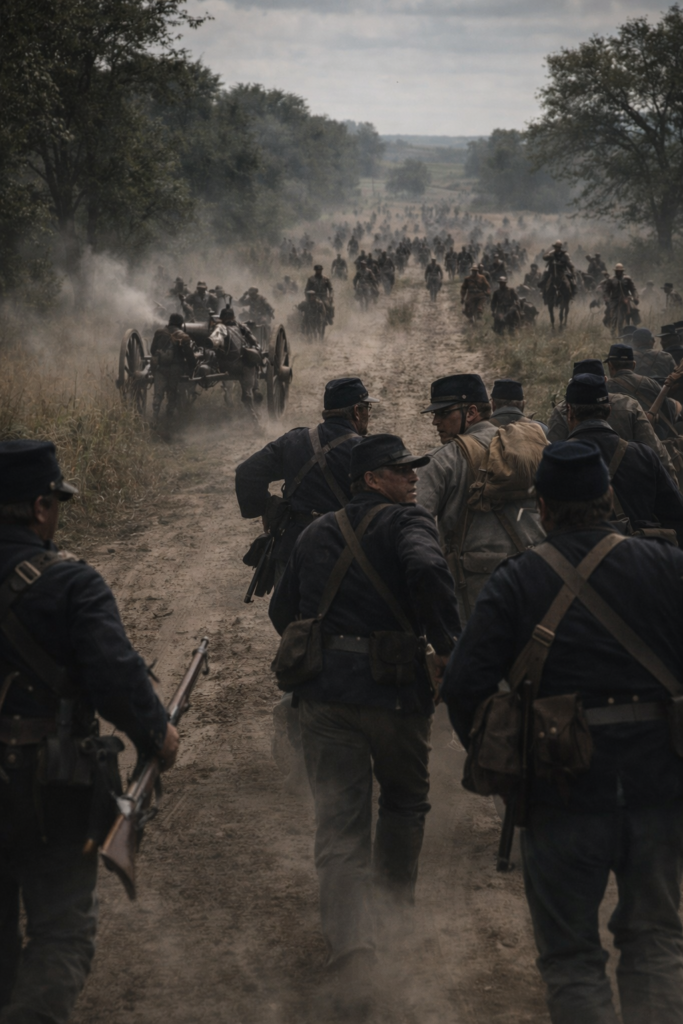
The Battle of Carthage wasn’t a stand-and-fight on one tidy field — it was a rolling clash that swept down the road, hit the town, and kept moving. On July 5, 1861, Missouri’s war turned into a running contest of pressure and retreat that pushed Sigel’s Federals back toward Sarcoxie.
Battle Snapshot (fast facts)
- Battle: Battle of Carthage
- Date: July 5, 1861
- Location: Jasper County, Missouri — beginning north of Carthage, moving into and through town
- Type: Battle
- Style of fighting: Running fight (moving contact → withdrawal under pressure → continued retreat)
Who Was There
- Union commander:
- Col. Franz Sigel
- Missouri State Guard / pro-Southern leaders:
- Gov. Claiborne Fox Jackson — commanded the Missouri State Guard force on the field
- Brig. Gen. James S. Rains — State Guard commander whose troops joined Jackson before the battle
- Maj. Gen. Sterling Price — major State Guard leader in the wider campaign, but not the best field-command label for Carthage
- Notable units involved:
- Union: mixed volunteer infantry with supporting artillery, limited cavalry support
- Missouri State Guard: large numbers of infantry, mounted men, and unarmed recruits — unevenly armed, but aggressive and numerous
What Happened (the story)
By early July 1861, southwest Missouri was becoming the next pressure point. The State Guard was gathering strength, the state government’s pro-Southern leadership was on the move, and control of roads and towns mattered as much as control of rivers. Into that tension came Franz Sigel, leading a Union column meant to disrupt organization in the region and keep the State Guard from shaping the pace of events.
The fighting on July 5 didn’t begin in Carthage. The first contact flared about ten miles north of town near the Dry Fork Creek area, and from the opening shots the battle behaved like Missouri often did—fast, unsettled, and constantly shifting. As the Missouri State Guard pressed forward, Sigel’s smaller force began a fighting withdrawal. Units fired, fell back, tried to reset, and then moved again as pressure closed in.
The running fight rolled south along the route remembered today as Civil War Road, with the State Guard driving the movement and Sigel trying to keep his retreat organized. A withdrawal like that is never clean: dust, heat, smoke, and conflicting sounds can turn a column into confusion if discipline cracks. Sigel’s goal was simple—avoid being pinned and surrounded while keeping his men together.
When the action reached Carthage, the fight tightened. Movement that had room to spread on open ground compressed into streets and corners. The engagement turned east as it pushed through town, continuing as a moving clash rather than a single decisive stand. It was the kind of fighting that punishes a force that can’t pause long enough to breathe—every halt risks being caught, every step back risks becoming a break.
Once through Carthage, Sigel kept withdrawing rather than gambling everything on one last position. The day ended with the Missouri State Guard holding the advantage on the ground and Sigel pulling his men back toward Sarcoxie, preserving the core of his command for what was coming next in the struggle for southwest Missouri.
Who Won + What That Means
- Result: Missouri State Guard / pro-Southern victory
- Type of victory: Tactical victory with recruitment and morale value
Carthage was a battlefield win for the State Guard because it forced Sigel off and kept him moving. In the summer of 1861, victories like that carried extra weight. They encouraged recruitment, boosted confidence, and signaled to uncertain communities that the State Guard could press hard and make Federal troops give ground.
Why It Matters
Carthage helps explain why Missouri’s war looked different from the classic “two lines on one field” image.
- It showed how quickly fighting could move along roads and into towns, dragging civilians and communities into the edge of war.
- It reinforced the importance of numbers, mounted mobility, and local momentum in early Missouri engagements.
- And it sits on the road toward the next phase in the southwest—where the struggle around Springfield would soon produce one of the most famous battles of 1861.
Carthage didn’t decide Missouri. But it did prove that southwest Missouri would be contested, and that the war there could roll across miles in a single day.
Next Up In This Timeline
August 2, 1861 — the Battle of Dug Springs, a skirmish as Lyon’s army and Price’s Missourians close in near Springfield.
When you visit Civil War sites, do you prefer places tied to one “set-piece” battlefield—or the road-and-town fights like Carthage that unfolded across miles?
Plan Your Next Missouri Civil War Adventure!
Ready to hit the road?
Plan your Missouri Civil War adventure with trusted travel tips, tools, and resources. Visit our Resource Page (Missouri Civil War Resources) to find everything you need for hotels, flights, car rentals, gear, and more.
Check Out Our Other Missouri Civil War Articles
Missouri Civil War Overview Articles
The Five Phases of Missouri’s Civil War
Missouri Civil War Battles (In Chronological Order)
Camp Jackson Affair — May 10, 1861
Battle of Boonville — June 17, 1861
Battle of Cole Camp — June 19, 1861
Check Out These Books Published By The Sojourner’s Compass
“Missouri in the Crossfire – The Civil War’s Forgotten Frontier” Series
From the streets of St. Louis to the prairies of southwest Missouri, this compelling short-read series uncovers the untold stories of a divided state at war. Each volume explores a new side of Missouri’s Civil War—its campaigns, commanders, civilians, and the conflicts that shaped its destiny.
Written for both history enthusiasts and casual readers, Missouri in the Crossfire brings the human side of the war to life through vivid storytelling, balanced perspectives, and accessible scholarship—all drawn from Missouri’s own battle-scarred ground.
Available on Amazon & Kindle Unlimited
“Battles & Beyond” – Companion Book Series
From river crossings to ridge fights, Missouri’s Civil War story was one of chaos, courage, and contested loyalties. This travel-ready series delivers concise battlefield guides packed with historical context, walking tips, firsthand quotes, and itinerary tie-ins—perfect for travelers, educators, and armchair historians alike.
Led by Jonathon Midgley, author of The Last Hand series, each volume brings forgotten fights into clear focus—making it easy to explore the war’s impact, one battlefield at a time.
Available On Amazon & Kindle Unlimited
Stay Connected
Follow us for travel inspiration, new articles, and short-form video features:
The Sojourner’s Compass TikTok
The Sojourner’s Compass YouTube
The Sojourner’s Compass Facebook
The Sojourner’s Compass Main Website
Leave a Reply